Electric standing desks have become a common feature in modern offices and home workspaces. As demand grows, buyers are looking beyond basic specifications such as lifting speed and load capacity. Motor performance, operating frequency, and heat management are also important when choosing an adjustable standing desk frame. One specification that deserves particular attention is the motor duty cycle. It defines how long a motor can operate before it needs to rest, making it an important consideration for furniture manufacturers, distributors, and OEM buyers looking for reliable lifting systems.
Duty cycle refers to the proportion of time an electric motor can operate within a defined cycle. It is usually expressed as a percentage or described through specific operating and resting intervals. In an electric standing desk frame, the motor runs when the desktop moves up or down. Once the permitted operating period has been reached, the system needs a rest interval to allow heat to dissipate.
Take a motor with a 10% duty cycle, for example. If its specified operating pattern is 2 minutes on and 18 minutes off, it can run for two minutes within a 20-minute cycle, followed by eighteen minutes of rest. The operating time therefore accounts for 10% of the total cycle. This does not mean users should routinely run the motor continuously for two minutes. Actual operation depends on the manufacturer's instructions and the system's rated conditions.
Understanding this specification helps buyers avoid a common mistake: assuming that a motor capable of lifting a heavy desktop or moving it quickly can also handle frequent, uninterrupted adjustments. Duty cycle describes a different aspect of motor performance and should be evaluated separately from lifting capacity and speed.
Heat is one of the main reasons electric motors have operating limits. When a motor drives a lifting column, part of the electrical energy is converted into mechanical movement, while some is released as heat. Repeated adjustments can raise the motor's internal temperature, particularly when the desk carries a heavy load or is operated at short intervals.
Allowing sufficient rest time gives the motor and related components an opportunity to cool down. Without adequate intervals, repeated operation beyond the specified limits may cause excessive heat buildup and activate thermal protection, if the system is equipped with it. Continued operation under unsuitable conditions can also place additional stress on motor components.
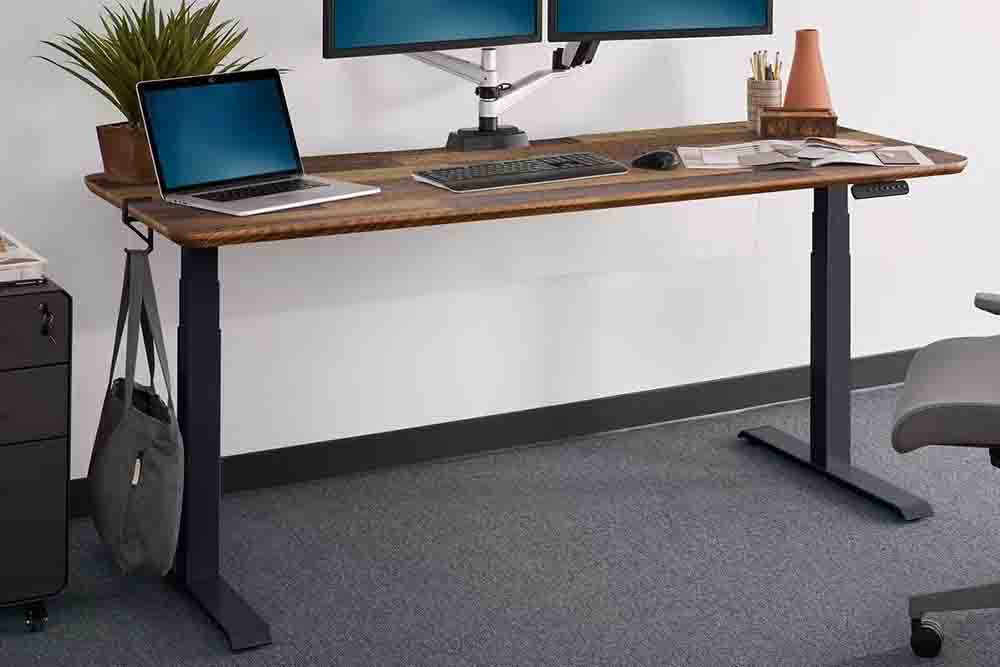
The actual lifting load matters as well. A standing desk may support a desktop, multiple monitors, monitor arms, and other office equipment. Although these items may fall within the frame's rated load capacity, their combined weight still affects the demands placed on the lifting system. Uneven weight distribution can create additional mechanical stress.
For this reason, buyers should assess duty cycle alongside load capacity, lifting speed, and available motor protection features. A faster lifting speed does not necessarily mean a motor can operate more frequently, just as a higher load rating does not automatically indicate a longer operating period. Each specification addresses a different performance requirement.
Several factors influence the operating requirements of an electric standing desk frame. Load is an obvious one. A heavier desktop and additional equipment increase the force required from the lifting system. Weight distribution also matters because an unevenly loaded desktop can place different demands on the lifting columns. Buyers should therefore consider the complete workstation setup rather than looking at the desktop's weight alone.
Motor configuration is another factor. Single-motor and dual-motor desk frames use different drive arrangements, and each has its own design and operating characteristics. In a dual-motor system, separate motors drive the lifting columns and work together to provide coordinated height adjustment. This arrangement can support higher lifting requirements and balanced movement when properly designed and controlled. However, having two motors does not automatically mean a higher duty cycle. The permitted operating time depends on the motors, control system, thermal design, and overall lifting mechanism.
Usage frequency also plays a role. A desk in a home office may only be adjusted a few times a day, while a shared workstation in a busy office could be adjusted by several users throughout the day. These applications place different demands on the lifting system. Furniture manufacturers should consider how often users are likely to change desk height, how much weight the frame will carry, and whether the motor's rated operating conditions suit the intended environment.
The first step is to check the manufacturer's stated duty cycle and understand how it is measured. A percentage alone is not enough to make a meaningful comparison. Buyers should also look for the corresponding operating and resting intervals, as well as any conditions that apply to the rating. Two products with the same duty cycle percentage may not necessarily have identical operating specifications.
Duty cycle should also be assessed alongside the other technical parameters of the frame. Load capacity indicates the rated lifting capability, while lifting speed determines how quickly the desktop moves between positions. Height range and stroke affect the range of adjustment available to users. Noise level is another consideration, particularly in open-plan offices, meeting rooms, and shared workspaces.
Mechanical compatibility deserves equal attention. Buyers should check the frame width against the intended desktop dimensions and confirm that the mounting arrangement is suitable. Correct assembly, secure fasteners, properly connected motor cables, and appropriate installation all contribute to reliable operation. For bulk furniture projects, it is worth confirming these details with the supplier before production begins.
The Dewert Okin DS2.451.3 adjustable standing desk frame provides a practical example of how duty cycle fits into a complete lifting system. According to its published specifications, the frame has a 10% duty cycle, with an operating interval of 2 minutes on and 18 minutes off. This gives furniture manufacturers and buyers a clear reference when assessing the system's operating requirements and matching it to their intended applications.
The DS2.451.3 uses a dual-motor lifting system with a rated load capacity of 1200N and a lifting speed of 35mm/s. Its height adjustment range is 600–1250mm, with a stroke of 650mm. The frame width can be adjusted from 1100mm to 1700mm, accommodating desktop widths of 1200–1800mm. Its operating noise level is specified at less than 48dB, making noise performance another relevant consideration for office and home workstation applications.
These specifications serve different purposes and should be considered together. The load rating relates to the system's lifting capability, while the duty cycle defines its operating and resting requirements. The adjustable frame width provides flexibility for different desktop configurations, and the height range determines how far the workstation can be adjusted. For furniture manufacturers developing sit-stand desks, evaluating these factors together provides a more complete picture of whether the frame meets project requirements.
For commercial furniture manufacturers and OEM buyers, duty cycle is more than a specification listed in a product catalog. It helps determine whether a lifting system is suitable for the way the finished workstation will actually be used. A desk designed for occasional adjustments in a home office may have different operating requirements from one installed in a shared corporate workspace.
Before choosing a supplier, procurement teams should review the duty cycle, load capacity, motor configuration, dimensional compatibility, and available technical documentation. It is also worth asking about assembly guidance, quality control procedures, and support for different desktop sizes or project configurations. These details become particularly important when ordering large quantities or developing a standing desk range for multiple markets.
Dewert Okin Technology Group, established in Germany in 1982, develops electric height-adjustable desk frames and related smart office components. Its product range includes single-motor and dual-motor desk frames, lifting columns, control units, and accessories for different workstation applications. With five global production bases and sales coverage in more than 28 countries and regions, the company serves furniture manufacturers and customers seeking integrated electric adjustment solutions.
Duty cycle plays an important role in choosing an electric standing desk frame because it defines how long the motor can operate and how much rest time it needs between operating periods. It also helps buyers assess whether a lifting system is suited to the expected workload and adjustment frequency. However, it should never be considered in isolation. Load capacity, motor configuration, lifting speed, height range, and installation requirements all influence the performance of the complete frame.
For furniture manufacturers, distributors, and OEM buyers, the most practical approach is to compare the full set of technical specifications with the demands of the intended application. The Dewert Okin DS2.451.3, with its dual-motor configuration and specified 10% duty cycle, offers a useful reference for evaluating electric height-adjustable desk solutions. Choosing a frame with operating characteristics that match real-world usage is essential to building dependable sit-stand workstations.